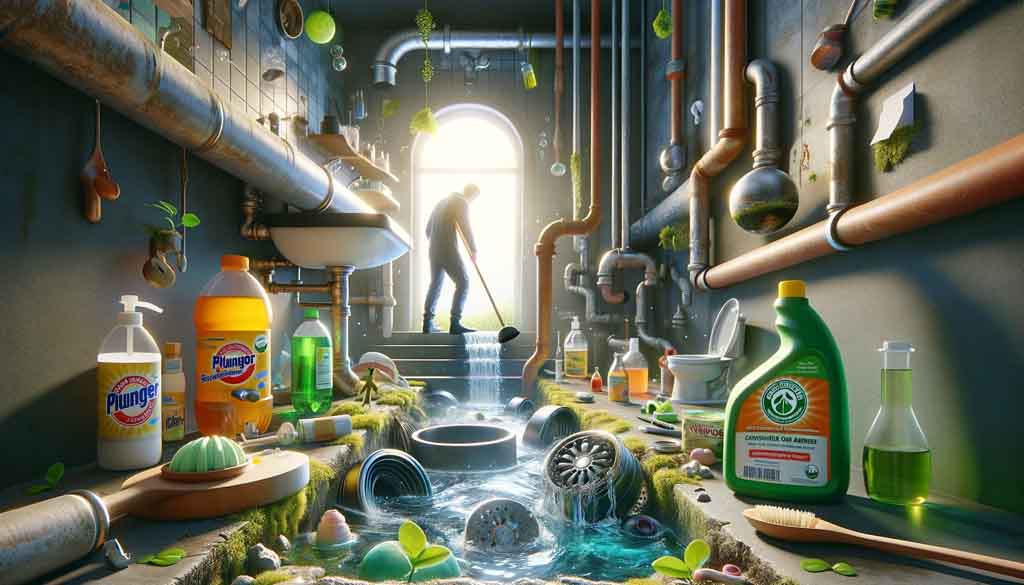
Unclogging is a problem that has been present throughout human history. The development of plumbing and sewer systems coincided with the development of the first methods for removing blockages. In this article, we will look back at the methods used in ancient times and the modern technology of today.
The ancient methods
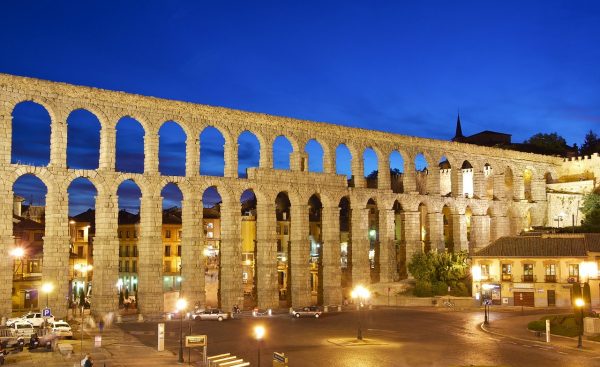
Ancient civilizations, such as ancient Egypt and Mesopotamia, recognized the importance of water pipes and sewers. However, such systems often had blockages that had to be cleared by hand or with simple tools. For example, archaeologists have found tools that the ancient Romans used to clean their sewers. for cleaning, such as special scrapers and rakes.
The Middle Ages and the Renaissance
During the Middle Ages and Renaissance, the development of water supply and sewage systems progressed at a slower pace, but blockages continued to occur. During this period, the removal of blockages was often carried out by local craftsmen using hand tools such as long poles and hand pumps.
The 19th century industrial revolution and industrial decongestion
The urban growth and development of new technologies that accompanied the Industrial Revolution presented new challenges to traffic congestion control. During the Industrial Revolution, the first mechanical anti-clogging devices such as rods and the steam engines that powered the rods. These devices allowed for more efficient and faster clearing of blockages in large cities and industrial areas.
The 20th century and modern blockage prevention
In the 20th century, technological advances revolutionized drain cleaning. The first motorized pipe cleaners and hydraulic tools powered by water pressure appeared, allowing for more efficient and faster removal of blockages. The development of wastewater treatment technologies brought further innovations to the unclogging in the field, such as environmentally friendly methods using biodegradation.
Today's modern technologies and methods
Today, modern tools and technologies are available in the field of blockage removal that would have been unimaginable in previous centuries. Robotic ferrets, hydraulic cleaning equipment and special chemically active materials all contribute to the effective and rapid removal of blockages. In addition, digital technology allows for more accurate mapping of sewer systems and easier access to blockage removal services via smartphone applications.
Interesting facts
- The ancient Roman canal system: Ancient Rome was famous for its sophisticated aqueduct and sewer system. These canals not only provided the city with water, but also helped to drain away sewage. The Romans regularly cleaned and maintained these canals, using special tools, as evidenced by archaeological finds.
- The major sewage projects in Paris: In the wake of the terrible odors and epidemics that plagued the city of Paris in the 19th century, the city government made a major effort to develop and modernize the sewer system. The project was led by Georges-Eugène Haussmann and contributed significantly to improving the city's hygiene and public health.
- Modern pipe technology: Today's pipe ferrets are specially designed robots used to work in sewers and water pipes. These machines often have cameras and sensors that help them precisely locate blockages and the condition of the drains, allowing them to work more efficiently and accurately.
- The role of biodegradation in environmentally friendly blockage removal: Biodegradation is a method that uses living microorganisms to break down organic matter and remove blockages. These methods are more environmentally friendly and less harmful to sewer systems and the environment than traditional chemicals.
- The role of smartphone apps in traffic congestion prevention: Modern technology allows for easier access and faster response to congestion relief services. Many congestion relief companies offer smartphone apps through which customers can easily book appointments and even report congestion.
Summary
The history of drain cleaning has been a long and varied one, leading to today's modern technologies and methods. The simple hand tools and methods of ancient people have undergone continuous development, while today the most modern tools and technologies help solve this eternal problem.
Do you need help?
Search us Feel free to contact us at one of our contact numbers, as we use the most modern tools to remove the most stubborn blockages! You can count on us every day of the year!