Why does the drain stink in hot weather?
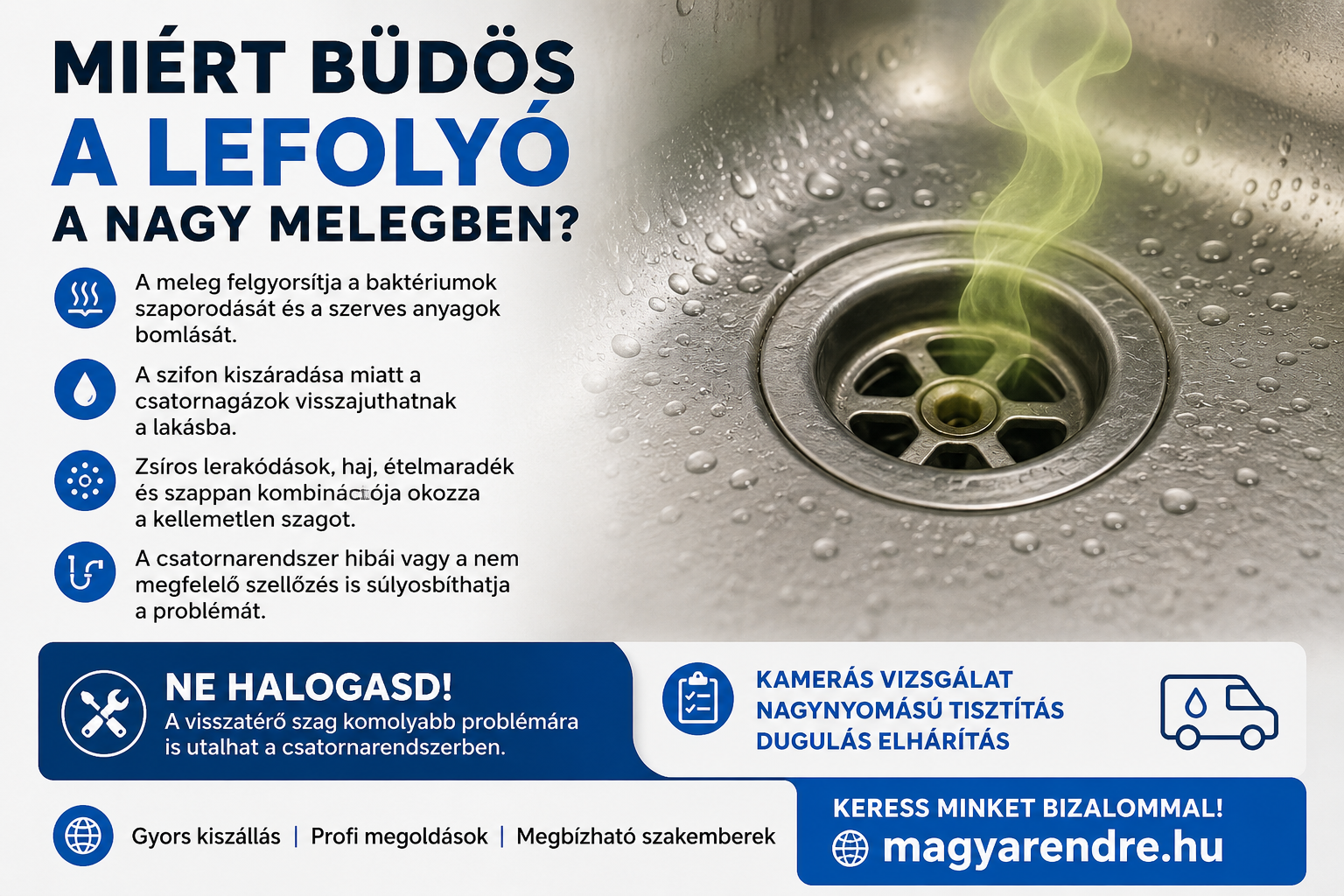
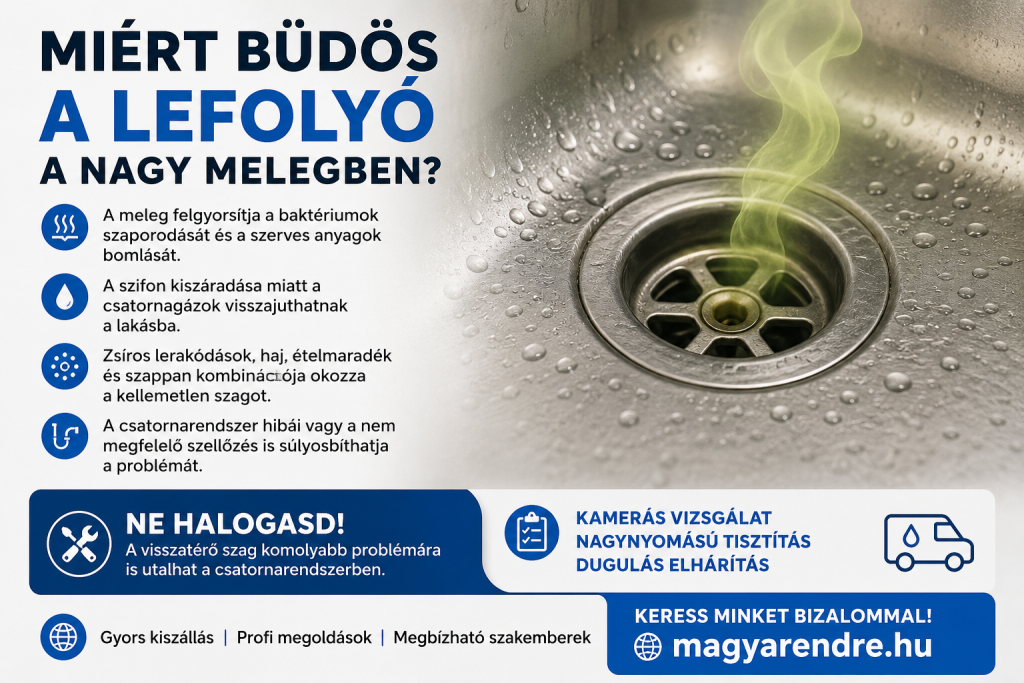
In the summer heat, many households experience an extremely unpleasant problem: the smell coming from the drain. This is not a coincidence, nor is it just an „unfortunate coincidence”. High temperatures significantly accelerate the decomposition of organic matter and favor the growth of bacteria and fungi in the pipes. The result: unpleasant, canal-like smell in the bathroom, kitchen or even the whole apartment.
The most common causes of drain odor in hot weather
1. Rapid growth of biofilm and bacteria
A thin layer called biofilm constantly forms on the inside of drains. It consists of grease, soap scum, food residue, and other organic matter. It is present under normal conditions, but in the heat of summer, bacteria break down these materials much faster.
The by-product of this is various gases that have a strong unpleasant odor. The hotter it is, the more intense this process is.
2. Decomposition of fatty deposits
A particularly common problem in kitchen drains is the build-up of grease. During dishwashing, the hot water makes the grease appear to be dissolved, but it refreezes on the pipe walls as it cools.
Warm weather speeds up the breakdown of fats, resulting in a rancid, putrid odor. This is one of the most common causes of summer drain odor.
3. Siphon drying out
The trap (U-shaped pipe) is designed to block the path of sewer odors with a small water plug. However, if the drain is rarely used – for example, in a guest bathroom or a rarely used sink – the water can evaporate.
This happens especially quickly in the summer heat, and at this time, sewer gases can return to the apartment unhindered.
4. Backflow of sewer gases
In warm weather, gases in the duct system expand and pressure conditions can change. If the system is not properly ventilated, gases can leak back into the living space.
This phenomenon is often accompanied by unpleasant odors coming from multiple drains at the same time.
5. Combination of hair, food residue, and soap
Hair, food residue, and soap scum that accumulate in bathroom and kitchen drains are ideal breeding grounds for bacteria. In warm weather, they decompose faster and produce stronger odors.
Why does the problem get worse in the summer?
The increase in temperature accelerates several processes at once:
- faster bacterial activity
- more intense organic decomposition
- faster water evaporation in siphons
- increased sewer gas formation
Together, these create a „perfect storm” in which the drain odor is much stronger and more frequent than during other seasons.
How can a smelly drain be prevented?
Regular cleaning
One of the most important steps in prevention is regular maintenance. Periodic cleaning of drains prevents the accumulation of deposits.
A simple homemade method can be:
- hot water rinse
- a combination of baking soda and vinegar
- using enzymatic drain cleaners
Avoiding grease and food residue
Grease that gets into the kitchen drain is one of the biggest problems. The best solution is to collect it separately instead of pouring it down the sink.
Checking siphons
It is a good idea to flush drains that are rarely used regularly to ensure that there is always water in the siphon. If you are not using them for a long time, you can even pour a little water into them as a preventative measure.
Adequate ventilation
A faulty vent in the sewer system can cause serious odor problems. If you smell a stench from several drains at the same time, it is worth suspecting this as well.
When is it needed? to a specialist?
Although in many cases the problem can be treated at home, there are situations when more serious intervention is required:
- recurring, strong sewer odor
- slow-flowing drains
- gurgling sounds from several drains
- regularly recurring blockage
In such cases, there is a high chance that there is a deeper deposit or partial blockage in the background, which can no longer be removed with simple cleaning. Professional camera sewer inspection and mechanical cleaning are an effective solution in such cases.
Summary
Summer drain odor is not a random phenomenon, but the result of a complex physical and biological process. Warm weather accelerates the decomposition of organic matter, the growth of bacteria and the formation of gas, while siphons also dry out more easily.
If your drain smells are recurring, especially in the summer heat, it's no coincidence - and it's not a problem worth putting off. The underlying cause is often deposits or hidden sewer defects that can lead to more serious blockages over time.
Our specialists use modern tools – including camera sewer inspections and high-pressure cleaning – to precisely identify the cause of the problem and then specifically eliminate it. This not only eliminates the unpleasant odor, but also prevents recurring problems.
If you want to avoid summer drain odors and more serious blockages, it's worth taking action in time: request an inspection or quick repair. intervention, before the problem becomes a bigger expense!