Sewer system problems can go undetected for a long time. However, slow-draining water, recurring blockages, unpleasant sewer odors, or intermittent backflow often indicate that the problem is not a simple blockage, but a structural problem in the pipeline. In such cases, accurate diagnostics are needed instead of guessing.
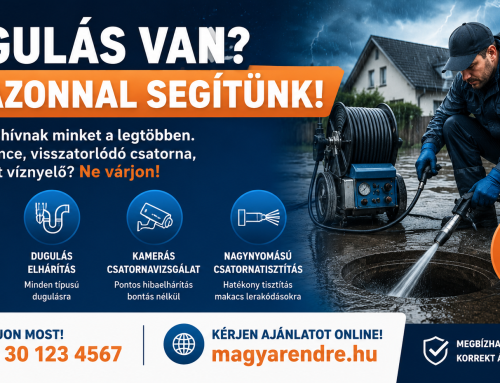
THE camera sewer inspection allows the interior of the sewer to be inspected without demolition work. The special sewer camera It shows the internal condition of the pipe in real time, allowing the technician to more accurately determine the cause, location and extent of the problem.
THE tube cameraing It is especially useful for recurring blockages, suspected pipe bursts, root ingrowth, sunken or deformed pipe sections, and before major renovations. But what exactly can you see with the camera?
What is a camera sewer inspection?
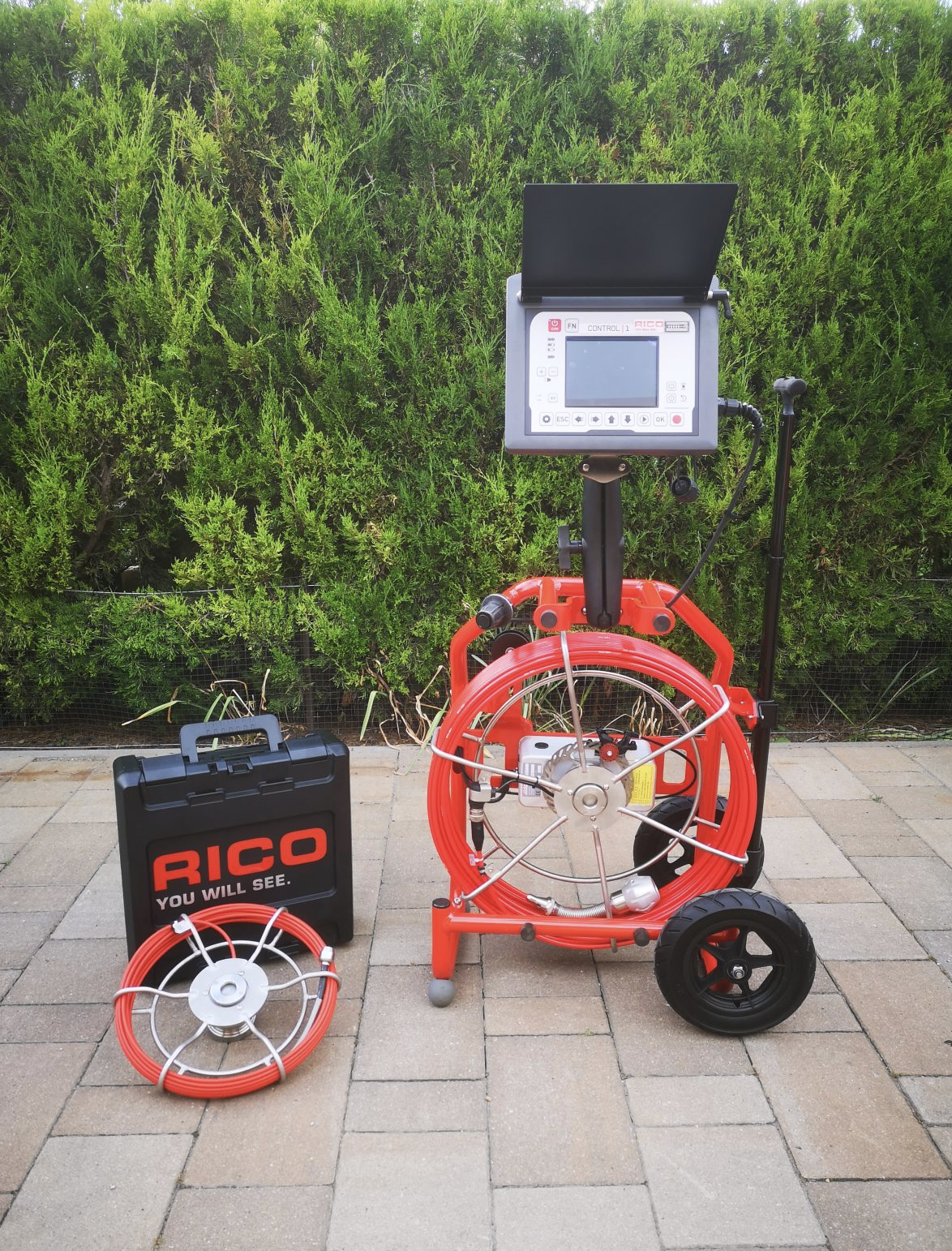
A camera sewer inspection is a diagnostic procedure in which a special camera head with lighting is inserted into the pipeline to be inspected. The specialist follows the camera image on a monitor, thus directly visualizing the internal condition of the sewer.
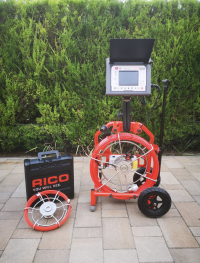
Depending on the equipment used and the size of the pipe, a push-rod camera or, in the case of larger pipes, a self-propelled camera cart can be used for the inspection. With Magyar Endre's service, documented photographs and videos can also be taken during the sewer camera inspection, and the inspection is even suitable for mapping longer pipe sections.
The camera doesn't simply show "if there is a blockage." A properly performed inspection can also identify structural and operational problems that are not visible from the outside.
Why is it beneficial to inspect the duct without dismantling it?
In the past, uncovering a hidden sewer fault was often only possible with significant demolition. This can be particularly inconvenient in places where the sewer is located in a wall, under a floor, under a covering or in the garden. duct inspection without dismantling On the other hand, it allows you to first pinpoint the problem area. This way, you don't have to randomly break up the floor or dig up a significant part of the garden.
With the help of a camera inspection, the technician can determine the location of the fault, and in some cases, the path of the duct can also be followed. The transmitter and meter counter built into the camera head can also help with more precise location determination. This does not mean that all duct faults can be repaired without dismantling. Camera inspection is primarily used to diagnosis makes it more precise: it shows where and what kind of problem to expect, so that the necessary repair can be planned more specifically.
7 faults that a sewer camera can show without dismantling
1. Cracked or broken sewer pipe
A cracked or broken pipe is one of the faults that can be particularly difficult to detect by visual inspection. A damaged pipe section can allow water and dirt to enter its surroundings, while the functioning of the sewer system gradually deteriorates. During the inspection, cracks, breaks and other damage may become visible on the inner surface of the pipe. This is especially important if the blockage occurs repeatedly in a property within a short period of time.
Recurring blockages do not necessarily mean that the previous blockage removal was inadequate. It is possible that a damaged pipe section is causing the problem.
2. Root ingrowth in the canal
Over time, plant roots can become embedded in damaged or improperly sealed pipe joints. The growth of the roots can gradually narrow the cross-section of the pipe, which can lead to slow drainage, deposits and then repeated blockages. The sewer camera root ingrowth can be directly observed. Based on the recording, it can be determined at which section the problem occurs, which can make it easier to plan the appropriate intervention. Root ingrowth can be a serious problem, especially in older sewer systems, so in the event of recurring blockages, it may be worth checking the cause of the problem with a camera. In addition to sewer cameraing, Magyar Endre also offers a root cutting service.
3. Sunken or deformed pipe section
Proper slope is necessary for a sewer to function properly. If a section of pipe sinks, deforms, or changes its designed slope, water and solid contaminants may not be able to flow properly.
This can result in recurring blockages or a gradual buildup of deposits.
During the camera sewer inspection, the internal geometry and condition of the pipe can be examined, thus allowing for the detection of subsidence and deformations. In the case of larger sewers, a special self-propelled camera system can also be used to inspect the slope of the sewer.
4. Faulty pipe joints and displaced joints
The different sections of the sewer system are connected to each other by various fittings and connections. If a joint becomes displaced, damaged or does not close properly, it can cause operational problems in the long term.
One of the important advantages of a sewer camera is that it can not only show larger breaks, but also check the condition of joints and connections.
The inspection can reveal branches, turns, connections, and other connection points. This can be especially useful in cases where the exact location or cause of a problem was previously unclear.
5. Foreign objects and construction debris in the pipe
Not everything blockage The cause is grease, hair or other household dirt. Foreign objects in the sewer or even construction debris left over from previous construction work can also obstruct the path of water. With the help of a sewer camera, the location and nature of such obstacles can be more easily determined.
This can be especially important in newly built or renovated properties, where a blockage that occurs later may be due to a construction-related problem.
6. Deposits and the exact location of the blockage
Sewer cameraing is not only suitable for detecting structural defects. Deposits, narrowings and obstructions that cause blockages inside the pipe can also be observed. One of the important advantages of the examination is that it is not only possible to determine that „the sewer is blocked somewhere”, but under appropriate circumstances, the more precise location of the problematic section can also be determined. With the help of the meter counter, the specialist can obtain information about the distance at which the given defect is located from the starting point of the examination. This can also be an important aid in planning subsequent interventions.
However, it is important that a camera inspection only makes sense if the camera can properly pass through the section being inspected. In a completely contaminated or clogged sewer, the camera image may not necessarily provide adequately evaluable information. For this reason, in many cases it is advisable to perform the camera inspection after cleaning or flushing the sewer.
7. Inadequate slope and channel structure problems
The slope of the sewer basically determines whether the wastewater and the particles it contains can move forward properly. If the slope is not correct, deposits can form more easily in certain sections. Too little slope will prevent water and impurities from moving at the right speed, while in other cases, improper design can also cause operational problems.
The inspection can also help in mapping the alignment and condition of the canal. For larger pipe diameters, it is also possible to measure the slope with a special self-propelled camera.
When is it worth requesting a camera sewer inspection?
It is not necessary to perform a camera examination immediately after every minor, one-time blockage. However, there are situations when it may be specifically justified.
In case of recurring blockage
If the blockage reoccurs regularly in the same place, it may be worth not only removing the current obstruction, but also finding its real cause.
If there is a sewer smell
There can be several problems behind the unpleasant smell. If the smell persists, it may be worth having the system inspected by a professional.
If you notice dampness or subsidence
Wetness on the wall, floor, or around the sewer line, or unusual subsidence in the garden, may also indicate a pipe fault.
Before major renovation or remodeling
Assessing the condition of an old sewer system can help ensure that not only visible problems are addressed during renovation.
Before buying a property
When buying a family home or other property, it is worth checking not only the visible parts of the building. Defects in the underground sewer system can mean significant future expenses, so a camera condition survey can be a useful additional inspection for older properties.
How does tube cameraing work?
The first step in the inspection is to determine the access point. From here, the technician will insert the sewer camera into the pipe being inspected.
The camera has strong lighting, so the inside of the pipe can be clearly seen on the monitor. The device provides a continuous image of the inspected section as it advances through the pipeline.
The specialist monitors the condition of the pipe wall, joints, branches, deposits, deformations and other irregularities. Modern systems are also suitable for taking photographs and video documentation.
If the equipment is equipped with a transmitter and meter counter, the location of the detected fault can be determined more precisely. This is especially valuable if targeted dismantling is still required for later repair.
Camera sewer inspection is not only blockage useful in case of
Many people associate sewer cameras exclusively with unclogging drains, even though the technology can be used for much more than that.
Camera inspection can be used to assess the general condition of the sewer system, search for structural defects, identify the cause of recurring problems, and in some cases, determine the route of the sewer.
The documentation of the inspection can also help in planning future repairs.
Why is it better to take a picture first than to randomly disassemble it?
One of the biggest risks when investigating a sewer fault is unnecessary demolition. If the exact location of the fault is not known, a larger area may need to be excavated to access the problematic section.
THE duct inspection without dismantling It first provides diagnostic information. It can show you whether a breakdown is really necessary and, if so, where it is worth intervening.
This is especially important in the case of tiled floors, walls, paved courtyards or landscaped gardens, where the cost and time required for restoration after demolition can be significant.
Therefore, camera recording does not necessarily trigger repair or demolition, but rather helps ensure that the necessary intervention is carried out. targeted, based on the identified problem happen.
Summary: what can a sewer camera show?
THE camera sewer inspection One of its biggest advantages is that it makes visible what is otherwise hidden in walls, floors or underground.
THE sewer camera can be used to identify, among other things:
- cracking and breaking of the sewer pipe
- the root ingrowth
- subsidence and deformation of the pipe
- the faulty or displaced joint
- foreign objects and construction debris
- the place of deposition and blockage
- as well as certain channel structure and slope problems.
If a blockage recurs regularly, you experience moisture of unknown origin, a sewer odor occurs, or you are curious about the condition of an old sewer system, a camera inspection can be an important diagnostic tool.
Modern technology allows the internal condition of the canal to be assessed in many cases. without demolition An accurate diagnosis can help ensure that decisions about the necessary intervention are made based on specific professional information, rather than guesswork.
Don't know what's causing your drain problem?
Camera sewer inspection allows the internal condition of the pipeline to be revealed without dismantling, thus allowing the cause and location of the blockage or sewer fault to be determined more precisely.
More accurate diagnosis, without unnecessary disassembly