
The sewer remembers everything – 15 years of sedimentation in a single pipe
The drain never forgets. Every drop of grease, hair, soap residue, and dirt that gets into the drain can leave a mark. Over the years, these can build up into a deposit that the residents of the house may not even know about for a long time. Until suddenly the water runs slower, the drain starts bubbling, or sewage appears where no one wants to see it.
Everything is fine on the first day.
Imagine an average family home. The sewage system is new or still in good condition. The water quickly disappears in the sink, shower and toilet. There is no unpleasant smell, no bubbling, no backflow. Of course, the owner does not think about what is happening a few meters away, in the walls or in the pipes running underground.
Yet something happens every single day.
A little grease from the kitchen sink gets stuck. Hair from the shower starts its journey. Soap residue, detergent, limescale and small dirt stick to the pipe walls. A single incident is not significant. The problem starts when the same thing happens over and over again.
Daily.
Weekly.
For years.
1–3 years: the invisible problem is born
The canal initially functions almost perfectly. The deposits are thin. The cross-section of the pipe changes little. The water flows unhindered.
The resident does not notice any of this. This is one of the most dangerous parts of the story. The sewer does not necessarily start to become problematic when there is already a clear blockage. The process can start much earlier. And the uneven surface that forms on the inner wall of the pipe can trap new dirt. The more material that sticks, the easier it is for another layer to stick to it. It is as if thicker and thicker layers are piled on top of each other.
From the outside, we still see the same pipe. But inside, the situation is completely different.
5 years: the pipe is no longer the same
After five years, some systems may develop significant deposits. This may be especially true in areas where large amounts of grease, hair, soap scum or other debris are regularly deposited into the drain. The inside diameter of the pipe may gradually decrease. This does not necessarily mean an immediate blockage. Water may still drain. It may just be a little slower.
Then after a while someone remarks:
„It seems like it used to flow faster.”
This is often the first warning sign.
8 years: strange symptoms appear
The sewer system may then react increasingly sensitively to larger amounts of water.
Water disappears more slowly while showering.
A little water sometimes stagnates in the sink.
There is a strange sound when flushing the toilet.
The drain sometimes bubbles.
Occasionally, an unpleasant odor appears.
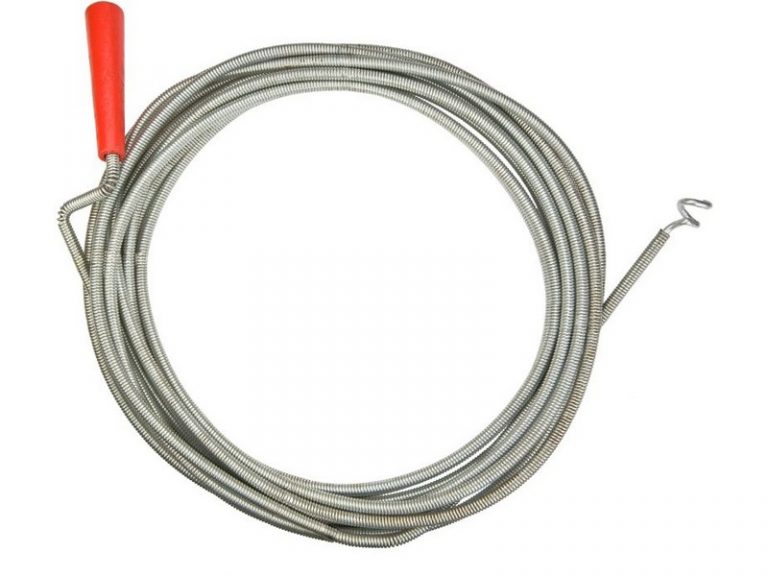
Most people don't think of a serious problem at this point. The well-known home solution arrives: a small drain cleaner, pump, spiral, or some trick found on the Internet. When the water drains again, everyone calms down.
But that still doesn't necessarily mean that it's clear what caused the problem.
10 years: the past begins to come back to haunt us
A lot can happen to a sewer system in ten years. In addition to deposits that develop during regular use, structural problems can also arise. In some pipes, displacement, cracking, breakage, deformation or improper slope can also cause operational problems. In outdoor sections, root ingrowth can also be a serious obstacle.
And this is where the story gets really interesting.
The problem with the drain is often not where the symptom appears. We see the water slowly draining under the sink, but the real obstacle may be several meters away. We experience backflow at the toilet, while the root cause is in another section of the pipe. And the unpleasant smell alone does not tell us exactly what is happening inside the system.
15 years: when it's no longer worth guessing
And fifteen years pass.
From the outside, the pipe may look completely ordinary.
It's in the wall.
It runs under the floor.
He is buried in the garden.
We don't see it.
We can't feel it.
We can't simply examine it from the outside.
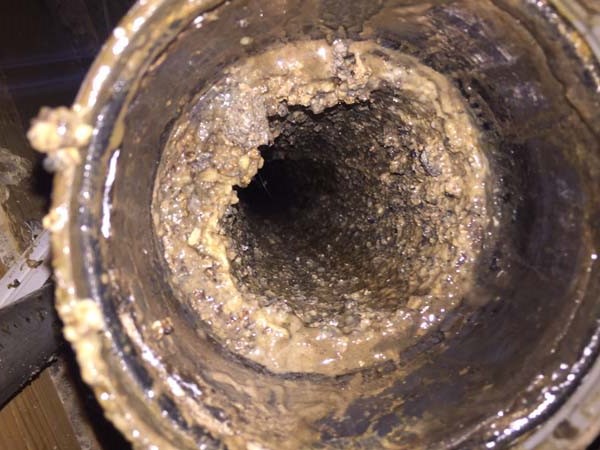
Yet inside, a story that has developed over many years may even emerge.
Deposits.
Narrowings.
Cracks.
Displaced pipe sections.
Root growth.
Foreign objects.
Or structural problems that cause the system to clog up again and again.
The question then is no longer "how to eliminate blockage?”, but rather „why does it get clogged again and again?”

One of the biggest tricks of the channel: the error is not always where we see it
This is why it is not always worth treating recurring blockages with the same method. If a drain becomes clogged somewhere, one intervention may temporarily clear the obstruction. But if there is an underlying damaged, poorly designed, heavily fouled or otherwise problematic section of pipe, the phenomenon may return later.
In such cases, instead of guessing, it can be much more worthwhile to see what is happening inside the pipe.
What does a sewer camera see?
One of the biggest advantages of camera sewer inspection is that you don't necessarily have to start troubleshooting with disassembly.
With the help of a camera inserted into the pipe, problems that are not visible to the naked eye can be detected.
During the examination, phenomena such as:
- significant deposits and narrowings
- cracks and injuries
- pipe displacements
- root ingrowths
- foreign objects
- problematic pipe sections
- in some cases, errors resulting from improper design.
This is a completely different approach.
We're not trying to figure out what could be wrong.
We'll try to see.
The camera is like opening a window underground
One of the biggest problems with sewer systems is that defects often remain hidden. The pipe may be under concrete, in a wall or in the garden. A more serious investigation can be time-consuming and expensive. A camera inspection, on the other hand, allows the specialist to directly examine what is happening inside the pipe.
This can be especially useful if:
- the blockage returns regularly
- the drain is making unusual noises
- there is an unpleasant odor
- the water is flowing down more and more slowly,
or there is a suspicion that it is not a simple blockage.
Not everything blockage identical
One of the most common mistakes is to treat all blockages the same way, even though the situation may be completely different for a kitchen grease build-up than for a root ingrowth or a damaged pipe. In one case, removing the build-up may be the solution. In another case, it is useless to clean the system over and over again if the root cause remains unchanged.
Therefore, it is important to distinguish between clearing the blockage and identifying the cause of the blockage.
The two are not always the same.
The biggest misconception: „If it runs now, everything is fine”
Not necessarily. If the system is working perfectly again after clearing a blockage, that is of course good news, but if the same problem occurs again after a few weeks or months, that is important information.
The channel actually signals.
He says:
„Something is wrong.”
In such cases, it is worth not only treating the current blockage, but also finding what is causing it again and again.
The channel really "remembers"„
Of course the channel It doesn't remember the way humans do, but anything that enters the system over a long period of time can leave a trace.
A small deposit can become another layer. A small narrowing can cause a more serious problem over time. An unnoticed crack can become a recurring defect. And a poorly designed section can cause discomfort for many years.
That's why it can be particularly interesting to consider that the inside of a pipe that has been in use for fifteen years is actually a kind of invisible diary.
He doesn't write on paper.
It does not contain dates.
Instead, it tells us what has happened to it in recent years through deposits, injuries and marks.
And what if we don't wait for the big trouble?
Not every strange sound or slower flow is a serious problem, but recurring symptoms should not be ignored for months or years.
Especially not if the blockage returns regularly.
In such cases, a camera duct inspection can help us get a more accurate picture of the condition of the system, and not just treat the symptom.
Because the sooner we find out what's happening in the pipe, the less room there is for speculation.
The story of the pipe begins where we can no longer see it.
The sewer system is one of the most important, yet most invisible parts of everyday life. We use it every day. We put a strain on it every day. And yet we almost never think about it.
Until something changes:
The water is flowing slowly.
The drain is bubbling.
An unpleasant odor appears.
The water is coming back.
Then suddenly something that we hadn't noticed before becomes important.
The question is not necessarily how to quickly clear the blockage.
But it is:
What is actually happening in the pipe? inside?
What is actually happening inside the canal?
Recurring blockages are not always caused by simple deposits.
A crack, root ingrowth, a displaced pipe, or other hidden defects could also be causing the problem.
With a camera sewer inspection, you can get closer to the answer without having to dismantle it.
I'M GOING TO SEE WHAT'S IN THE PIPE →
Camera sewer inspection • Detection of hidden defects • Troubleshooting without dismantling