When the sink or shower gets clogged, most people reach for the first instinct: they run to the nearest store and grab a cheap, advertised drain cleaning granule or gel from the shelf. According to the manufacturer's promises, it will dissolve grease, hair, and stubborn deposits within minutes, allowing the water to flow freely again. However, the reality is often quite different, and what you thought was a penny savings at home can end up causing hundreds of thousands of forints of damage to your home's plumbing system.
How does dust become concrete? The background to the chemical process
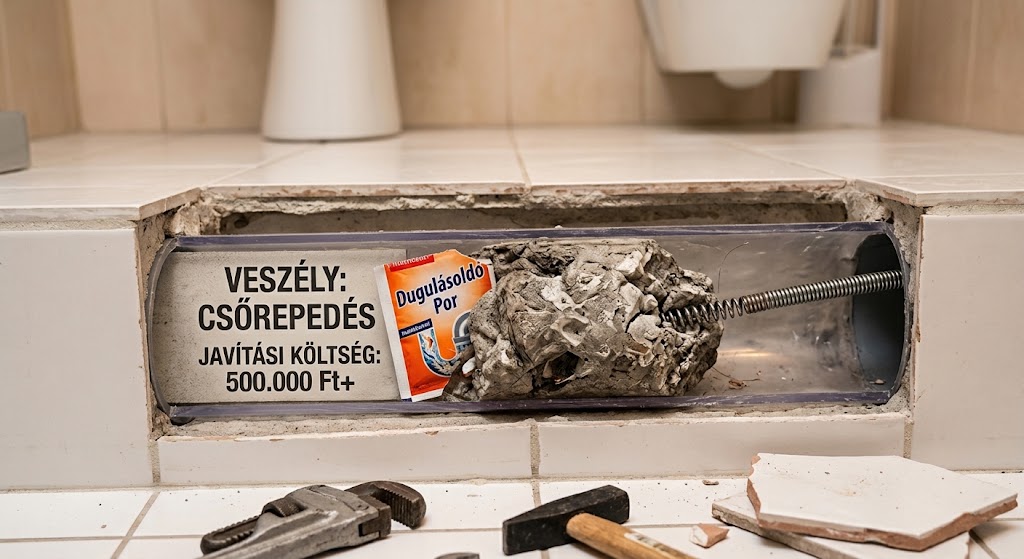
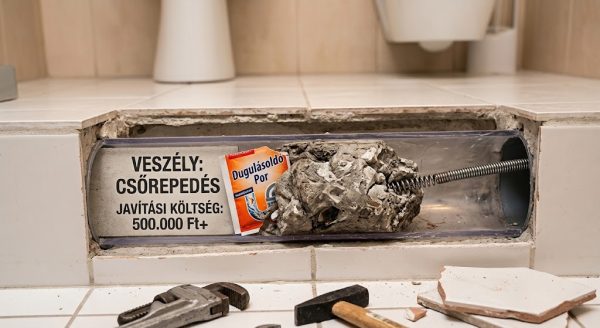
The main active ingredient in store-bought alkaline drain cleaners is typically sodium hydroxide, or caustic soda. This compound reacts with organic materials, such as kitchen grease or hair, saponifying them when exposed to high heat. The problem begins when the user pours too much into the drain or does not flush it with enough hot or warm water. If the granules are not completely washed out of the pipe, but instead get stuck in a bend or narrow section, the compounds in them combine with the water and organic debris remaining in the pipe to form a rock-hard, concrete-like mass. This double block or chemical deposit not only does not solve the blockage, but also creates a hermetic seal that is almost impossible to break through with conventional means.
What mistakes do we make most often?
The chemical cleaning There is a long list of mistakes made during cleaning. Many people believe that if one dose doesn't help, double it will be even more effective. However, this drastically increases the heat generation and the risk of hardening, while also wearing out the plastic pipes. Another common mistake is to pour the powder into a completely clogged drain filled with standing water. In this case, the agent cannot reach the root of the blockage, but settles halfway, creating a concrete-hard plug there. Another serious source of danger is when different types of cleaning agents, such as acidic and alkaline agents, are mixed one after the other, which not only damages the pipes, but can also produce gases that are harmful to health, while literally eating away at the material of the pipe system.
Why can the bill reach half a million?
When store-bought drain cleaner becomes a rock-hard block in a wall or under-floor pipe system, the situation can no longer be resolved with a simple pumping or manual spiraling. The concrete-hard plug can stretch the joints of plastic pipes or crack the pipe itself. If the pipe is damaged in the wall or under the cladding, the repair will require serious demolition work. The floor slab must be broken up, the tiled wall must be dismantled, the damaged sections of the pipe must be replaced, and the entire room must be re-tiled and painted. By the time the specialist carries out the restoration, the demolition, installation and restoration costs can easily reach or exceed half a million forints, not to mention the inconvenience that lasts for days and the chaos that reigns in the apartment.
What should you do instead of harsh chemicals?
Prevention and professional treatment is always cheaper than cleaning the drain. Regular cleaning of the siphon, using filters that prevent hair and larger food debris from entering the network, helps a lot in avoiding problems. If a stubborn blockage does develop, it is worth avoiding pouring strong, corrosive chemicals without a collar. Mechanical cleaning, such as a pipe ferret or spiral of the appropriate length, is much safer for the pipes, because it physically removes the dirt without forcing dangerous substances into reactive bonds inside the pipe. However, if the problem is deeper, in the main drain pipe, you should not risk experimenting at home.
Don't risk the safety of your home and your wallet with corrosive products of uncertain effect. If the water doesn't drain or the sewage is backing up, trust to a specialist the task!
Is the water stuck or has the chemical solidified in the pipe? Our team can remove even the most stubborn blockages in Budapest and its surroundings without dismantling, with professional machines, and on call 24 hours a day.