The history of plumbing
The problem of sewage disposal is as old as the history of mankind. Thousands of years ago, the inhabitants of the first cities already had primitive sewer networks were developed, and more advanced civilizations created unique loincloths and bathing rooms within the living quarters. The remains of some pipes can still be visited today in the Middle East thanks to archaeological work.
But who were the professionals who created and maintained these sewer networks, which are impressive even to modern eyes? In our article, we answer this question by introducing the history of plumbing and one of the earliest tools used to unclog drains.
Who were the first plumbers?
Plumbing as a profession developed sometime in ancient times. This is also indicated by the English word plumber, whose etymological origin can be traced back to the Latin word plumbum, meaning lead. Since lead was the preferred material for water pipes built in the Roman Empire, it can be assumed that the first plumbers were master tinsmiths specializing in metalworking. Later, however, due to the diversity and complexity of the tasks, plumbing could become an independent profession.
Although the constant wars and uncertainties of the early Middle Ages did not favor the development of the craft, the profession did not disappear completely. If not in poorer homes, then in royal courts there was a constant need to introduce clean drinking water and eliminate sewage.
Plumbers in Hungary
In Hungary, not all residents had access to a drinkable spring, and the wells were often contaminated. Those who could afford it drank wine, which had a lower alcohol content than today, but was cleaner than natural drinking water. It was not for nothing that King Matthias invited masters from Italy in the second half of the 15th century to conduct the water of the spring on the Swabian Hill, which was considered to be of suitable quality, to the Buda Castle. The total length of the network was nearly 6 kilometers, and the materials were mainly lead, tar and wood.
THE water pipe It followed the physical principle of moving vessels, the 100-meter difference in level between the spring and the built well ensured an abundant water supply in the castle. It is difficult to see in retrospect why foreign plumbers could have judged the water of the spring to be clean. What is certain is that there were far fewer people living around the spring on the Swabian Hill in the 1400s, so the water quality was probably better. The first truly Hungarian masters had to wait until the Industrial Revolution. The plumbers built a new, modern network to ensure the water supply and sewage disposal of the capital.
One of the oldest anti-clogging devices
Today, plumbers generally perform the following tasks: installing and maintaining pipe networks, creating sewage systems, draining and pressurizing buildings, and installing garden irrigation systems.
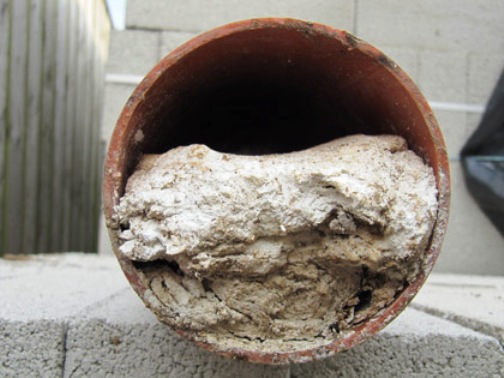
They need a variety of tools and equipment to do this. A very old, yet effective helper is the pipe ferret. Although its origins are shrouded in mystery, legend has it that in the 17th century, an ingenious gentleman solved the problem of cleaning the London sewers by using rats and ferrets. The animals were simply sent into the sewers and then forced to flee by lighting a fire behind them. The rats and ferrets also chewed their way through the blockages. Some say that the rats really did work, but the ferret is just a myth. In any case, the name is traced back to this story. The modern ferret A long, flexible metal rod with a hooked end that is inserted into the drain. The hook, like the auger, mechanically breaks a path in front of it, thus unclogging the drain.
Do you need a professional plumber?
Our company, with nearly thirty years of experience, undertakes in Budapest and in surrounding counties plumbing and blockage removal tasks elvégzését. Sürgős esetekben a rendelkezésére állunk. Vegye fel velünk a relationship at one of the given contact details! Contact us with confidence!